Every December, the same small question pops up in millions of inboxes and greeting cards: should you write “Happy Holiday” or “Happy Holidays”? It looks like a tiny detail, but getting it wrong can make a message sound awkward, incomplete, or even confusing to the reader.
The short answer is that “Happy Holidays” is the correct choice almost every time you’re sending a general seasonal greeting. “Happy Holiday” isn’t wrong, but it only fits very narrow situations. Below, we’ll break down exactly why, when each version works, and how to avoid the mistakes most people make without realizing it.
The Real Difference Between “Happy Holiday” and “Happy Holidays”
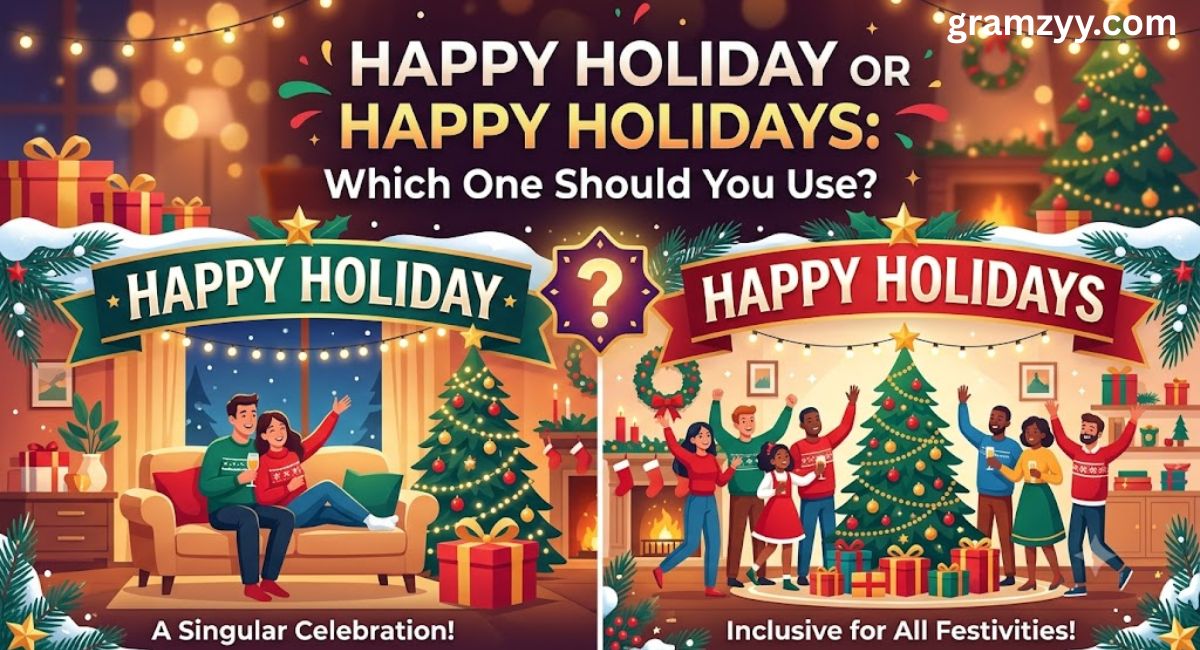
The entire difference comes down to one letter — and one grammar rule: singular versus plural.
- Holiday (singular) refers to one specific day of celebration, such as Christmas, Thanksgiving, or Diwali.
- Holidays (plural) refers to a whole stretch of celebrations happening close together, like the period from late November through early January that includes Thanksgiving, Christmas, Hanukkah, Kwanzaa, and New Year’s Day.
Because most people are wishing someone well across an entire festive season — not just one isolated day — the plural form is the one that matches real life. That’s also why “Happy Holidays” shows up everywhere: in store displays, corporate emails, TV ads, and greeting cards. It’s a single phrase that covers multiple traditions at once, which makes it naturally inclusive.
“Happy Holiday,” on the other hand, is grammatically correct but far more limited. It works only when you’re clearly referring to one particular day, not a whole season.
Which Is Correct: Happy Holiday or Happy Holidays?
Both phrases are grammatically valid English — neither one isf “wrong” in the strict sense. The real question isn’t correctness; it’s fit.
| Aspect | Happy Holiday | Happy Holidays |
|---|---|---|
| Grammar | Singular noun | Plural noun |
| Refers to | One specific day (Christmas, Eid, etc.) | The entire festive season |
| Common usage | Rare in the U.S.; more common in British English (meaning “vacation”) | Very common in American English |
| Best for | Personal notes when you know the exact holiday | General greetings, professional emails, cards, public messages |
| Tone | Specific, personal | Broad, inclusive, neutral |
For everyday use — emails, texts, cards, social posts — “Happy Holidays” is the safer and more natural default. It doesn’t assume which specific holiday someone celebrates, which makes it a respectful choice for mixed audiences like coworkers, clients, or classmates.
When Should You Use “Happy Holiday”?
Use the singular form only when the context clearly points to a single day, not a season. A few situations where it makes sense:
- You know exactly which holiday the person celebrates (“Happy Holiday, hope your Diwali is wonderful”).
- You’re writing in British English and mean “enjoy your vacation,” since “holiday” in the UK often means time off work rather than a festive date.
- You’re referring to a specific day in a sentence, such as “We have a happy holiday this Friday.”
Outside of these cases, “Happy Holiday” can sound incomplete to American ears, since listeners expect the phrase to cover the whole season.
When Should You Use “Happy Holidays”?
“Happy Holidays” is the go-to choice whenever your message could apply to more than one celebration or you’re unsure which holiday someone observes. It works well for:
- General greetings sent to a wide or mixed audience
- Workplace and client emails during December
- Store signage, marketing campaigns, and public announcements
- Cards and messages where you don’t want to assume a specific religion or tradition
A simple test: if you could replace the phrase with “the whole season,” the plural form is the right one.
Correct and Incorrect Usage Examples
Correct Usage
- Happy Holidays to you and your family!
- We wish you happy holidays and a restful season.
- Happy Holiday, Grandma — enjoy your Christmas dinner tonight. (specific day, known holiday)
- Sending happy holidays your way from all of us at the office.
Incorrect Usage
- ~~Happy Holiday to everyone celebrating this season.~~ (Season, not one day — should be plural)
- ~~Wishing you a happy holidays.~~ (Article “a” doesn’t pair with a plural noun)
- ~~Happy Holidays, enjoy your trip next week.~~ (Refers to one specific vacation — singular fits better here)
Context Variations
| Situation | Better Choice | Why |
|---|---|---|
| Office holiday email to all staff | Happy Holidays | Covers multiple traditions |
| Card to a friend celebrating Hanukkah specifically | Happy Holiday (or name the holiday directly) | Refers to one celebration |
| Store window sign in December | Happy Holidays | Broad, inclusive audience |
| British colleague going on vacation | Happy Holiday | “Holiday” means vacation in the UK |
Common Mistakes with Holiday Greetings
Even careful writers slip up here. The most frequent errors include:
- Using the singular form for a general message. Writers often default to “holiday” without pausing to think about whether they mean one day or the whole season.
- Overcorrecting into the plural everywhere. Some people use “Happy Holidays” even when clearly referring to a single event, like someone’s upcoming vacation — this can sound off.
- Mismatched articles. Pairing “a” with “holidays” (“a happy holidays”) breaks basic noun agreement.
- Assuming regional usage is universal. British “holiday” (vacation) and American “holiday” (festive day) don’t always translate directly, which can confuse international audiences.
- Forgetting audience diversity. Defaulting to a specific holiday’s name when you don’t know what someone celebrates can feel exclusionary — this is often exactly why “Happy Holidays” became the standard greeting in the first place.
Memory Tricks to Choose the Right Phrase
If you’re ever stuck mid-sentence, try one of these quick mental shortcuts:
- The “season swap” test: Can you replace the phrase with “the whole season”? If yes, use “Happy Holidays.”
- The “this day” test: Can you replace it with “this day” or “this event”? If yes, use “Happy Holiday.”
- Count the celebrations: One holiday in mind = singular. Multiple holidays or unsure which one = plural.
- Default to plural when in doubt. Since most greetings are meant to be broad and welcoming, “Happy Holidays” is the safer everyday choice.
Context and Usage Guide
| Context | Recommended Phrase |
|---|---|
| Professional/work email | Happy Holidays |
| Greeting card (general) | Happy Holidays |
| Greeting card (known specific holiday) | Name the holiday, or “Happy Holiday” |
| Marketing/advertising copy | Happy Holidays |
| Casual text to a close friend | Either works, depending on what you both mean |
| British English “vacation” context | Happy Holiday |
| Social media post to a broad audience | Happy Holidays |
Conclusion
When in doubt, “Happy Holidays” is the safer, more versatile, and more widely accepted greeting for the festive season, especially in American English and professional settings. Save “Happy Holiday” for those specific moments when you’re clearly talking about a single day or writing in a British English context where “holiday” means vacation.
Getting this small detail right shows attention and respect for your audience — and now you’ll never have to second-guess it again.
FAQs
Is “Happy Holiday” grammatically correct?
Yes, it’s correct, but it only fits when referring to one specific day or event, not an entire season.
Is “Happy Holidays” more common in the U.S.?
Yes, it’s the standard greeting in American English because it covers multiple celebrations at once.
Can I use “Happy Holidays” for just one holiday, like Christmas?
Yes, but it’s more common to say “Merry Christmas” if you know that’s the specific holiday being celebrated.
Does “Happy Holiday” mean something different in the UK?
Often, yes — in British English, “holiday” usually means vacation, so “Happy Holiday” can mean “enjoy your trip.”
Which one should I use in a work email?
“Happy Holidays” is the safer, more inclusive option for professional and mixed-audience messages.
Is it ever wrong to use the plural form?
It can sound off if you’re clearly referring to a single event, like one person’s upcoming vacation, rather than the whole season.