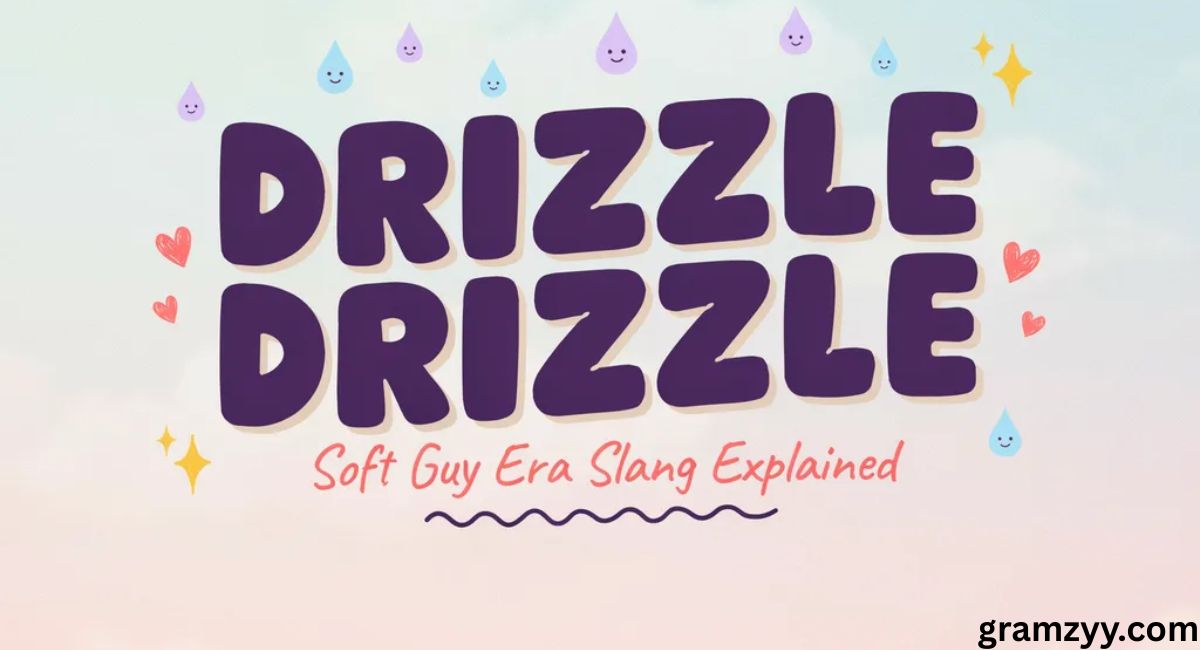
If you’ve spent any time on TikTok in 2024 or 2025, you’ve probably seen the phrase “soft guy era drizzle drizzle meaning” pop up in comment sections and videos — often right next to something about a man’s “soft guy era.” It sounds funny, maybe a little absurd, and that’s kind of the whole point. These two phrases are connected to one of the most talked-about internet trends of the past two years: a satirical movement that flipped traditional gender role expectations and sparked genuine cultural debate.
This article breaks down exactly what “soft guy era drizzle drizzle meaning” means, where it came from, how to use it correctly in writing and conversation, and why it still matters today.
Contextual Examples
Before diving into definitions, here’s what the phrase looks like in action:
- “I lost money day trading — drizzle drizzle. Someone send me $25,000.”
- “I’m in my soft guy era. I don’t date anyone who can’t take care of me. Drizzle drizzle.”
- “She opened the door for me and paid for dinner. Drizzle drizzle, this is the life.”
Each use is ironic, playful, and self-aware. The phrase is rarely meant literally — it’s commentary dressed up as comedy.
What Soft Guy Era Means
The “soft guy era” is a social media trend, largely driven by TikTok, in which men declare they are stepping back from traditional masculine “provider” roles. Instead of being the one who pays for everything and holds everything together, the soft guy embraces emotional openness, self-care, and a preference for being supported — not just doing the supporting.
The trend emerged in early 2024, largely popularized by TikTokers @scarfacemark and @lil.goodiee. It was built as a direct parody of the 2023 “soft girl era,” a movement in which women embraced gentleness, low stress, and domesticity — while sometimes expecting men to provide financially. The soft guy era flipped that dynamic and asked: what if men wanted the same things?
The movement is mostly satirical. Most creators are not seriously demanding financial support from their partners. They are pointing out a perceived double standard: that women who asked for care were celebrated, while men who asked for the same were mocked. It sparked real conversations about gender roles, equality in relationships, and what emotional labor actually looks like.
What Drizzle Drizzle Means
“Drizzle drizzle” is the signature catchphrase of the soft guy era movement. It functions as a verbal punchline — a way to end or punctuate a statement about being soft, being pampered, or rejecting financial pressure.
It is a direct parody of “sprinkle sprinkle,” a phrase popularized on TikTok in 2023 by creator Leticia Padua. “Sprinkle sprinkle” was used by women to say something like “bless your heart” or “right back at you” — often in the context of advising women not to date men who couldn’t provide for them. “Drizzle drizzle” mimics that energy and flips it, with men using it to say the same things about the women they date.
The repetition (“drizzle drizzle” rather than just “drizzle”) adds a rhythmic, meme-like quality that makes it easy to remember, quote, and remix. It’s not a word with a fixed dictionary definition — it’s a cultural signal.
Literal Meaning of Drizzle
In standard English, “drizzle” means light, gentle rain — the kind that barely wets you but doesn’t stop. As a verb, it means to pour something slowly and lightly (like drizzling olive oil over a salad). In the context of this trend, the literal meaning is subverted for ironic effect. The “drizzle” suggests a slow, steady, gentle flow — not a downpour, but a consistent soft presence. It works poetically with the “soft” in “soft guy era.”
Combined Use in Social Contexts
Together, “soft guy era drizzle drizzle meaning” functions as a complete cultural statement. It tells the listener:
- I am a man choosing softness over toughness.
- I reject the expectation that I must always provide financially.
- I want to be cared for, taken out, and supported too.
- And I’m saying all of this with humor and self-awareness.
The phrase is most commonly found in TikTok captions, comment sections, Instagram reels, and Twitter/X posts. It’s used both by people who genuinely relate to the sentiment and by people who find it funny as a meme.
See also: How Was Your Night? Meaning, Usage, and Examples
Common Mistakes
When writing about internet slang — especially for blogs, articles, or social media posts — a few common errors come up repeatedly with phrases like “soft guy era drizzle drizzle.”
Mistake 1 — Treating the Phrases as Fixed Definitions
“Drizzle drizzle” does not have one locked-down meaning. It’s a living piece of internet slang that different creators use in slightly different ways. Treating it like a dictionary definition will lead to oversimplification.
✅ Better approach: Explain the core concept, then acknowledge that tone and context can shift the meaning.
Mistake 2 — Quoting Slang in Formal Writing
Using “drizzle drizzle” in a formal essay, report, or academic paper without framing it is a mistake. Slang demands context.
❌ “Men today are experiencing a drizzle drizzle moment in relationships.” ✅ “Men today are engaging with what TikTok culture calls the ‘soft guy era’ — summarized by the catchphrase ‘drizzle drizzle.'”
Mistake 3 — Loose Modifier Placement
When explaining these phrases, misplaced modifiers create confusing sentences.
❌ “Made popular by @scarfacemark, many men began using the phrase on TikTok.” ✅ “After @scarfacemark popularized the phrase, many men began using it on TikTok.”
Mistake 4 — Using the Phrase to Mask Rudeness
While “drizzle drizzle” is satirical, using it to genuinely dismiss or demean a partner’s financial situation is no longer ironic — it’s just unkind. Know the difference between parody and cruelty.
Mistake 5 — Confusing Subject and Object in Embedded Clauses
When reporting what creators said, pronoun confusion is common.
❌ “@scarfacemark, who many credited as starting the trend, said him started it as a joke.” ✅ “@scarfacemark, whom many credit for starting the trend, said he intended it as a joke.”
American vs British English Differences
Core Meaning: Shared Across Regions
The soft guy era and “drizzle drizzle” are internet-native phrases. They do not change meaning based on geography. An American TikToker and a British TikToker using the phrase are saying the same thing.
Tone and Register
American internet culture tends to lean into the absurdist humor of “drizzle drizzle” more openly. British usage may carry a drier, more understated irony — but the phrase still lands the same way in comment sections on both sides of the Atlantic.
Preposition and Phrase Choices
When writing about the trend, minor differences emerge:
| Context | American English | British English |
|---|---|---|
| Talking about the trend | “in his soft guy era” | “in his soft guy era” (same) |
| Discussing providers | “he pays for dinner” | “he pays for dinner” (same) |
| Expressing approval | “that’s so soft” | “that’s quite soft” |
| Reporting on platforms | “on TikTok” | “on TikTok” (same) |
Audience Matters More Than Country
Whether you’re writing for a British or American audience, the bigger question is: does your reader know this slang? If not, explain it regardless of your region.
See also: Continual vs Continuous — Difference and Usage Explained
Idiomatic Expressions
Soft-Related Collocations
The word “soft” carries a whole family of related phrases in modern internet slang:
- Soft life — living gently, prioritizing comfort and ease over hustle
- Soft launch — casually introducing something (or someone) to your audience
- Soft girl / soft boy — aesthetics emphasizing pastel colors, emotions, and vulnerability
- Soft guy era — the specific trend described above
Drizzle Drizzle as an Interjection
“Drizzle drizzle” often functions as a standalone interjection — a verbal punctuation mark that adds tone rather than information. It works like “and that’s that,” “periodt,” or “slay” — phrases that close a statement with attitude.
“I don’t date people who can’t afford me. Drizzle drizzle.”
Parody and Counter-Phrases
The phrase has spawned its own ecosystem of counter-phrases and variations:
- “Sprinkle sprinkle” — the original phrase it parodies (used by women, 2023)
- “Shower shower” — an escalation used to imply even higher standards
- “Storm storm” — used sarcastically to mean “intense demands”
These variations show how internet slang evolves quickly, with each generation of users adding their own layer of irony.
See also: Back to Square One: Meaning, Usage, and Examples
Practical Tips
If you’re writing about internet slang, Gen Z culture, or modern dating trends, these tips will help you do it well.
Tip 1 — Label Slang and Explain It
Always identify “drizzle drizzle” as slang before using it. Don’t assume readers know it.
Tip 2 — Keep Sentences Short for Clarity
Internet slang articles perform better when sentences are short and easy to scan. Write for readers skimming on a phone.
Tip 3 — Avoid Slang in Official Messages
“Drizzle drizzle” belongs in casual content only — social media posts, blogs, and entertainment articles. Keep it out of professional emails, press releases, and formal reports.
Tip 4 — Check Verb Tense and Agreement
Mixing up tenses when describing the origin of a trend is a common error.
❌ “The trend starts in 2024 when men begin posting videos.” ✅ “The trend started in 2024 when men began posting videos.”
Tip 5 — Place Modifiers Next to the Words They Modify
❌ “Drizzle drizzle was used by many men making fun of dating roles satirically.” ✅ “Many men used ‘drizzle drizzle’ satirically to mock traditional dating roles.”
Tip 6 — Use the He/Him Test for Who/Whom Questions
Not sure whether to use “who” or “whom” in a sentence? Substitute “he” or “him.” If “he” fits, use “who.” If “him” fits, use “whom.”
“The creator who started the trend…” → He started the trend ✅
Tip 7 — Be Careful Quoting Potentially Harsh Speech
Some soft guy era videos include cutting remarks about financial expectations. When quoting these, add context so the reader understands the satirical frame.
Tip 8 — Make Examples Copy-Paste Ready
When writing about how to use “drizzle drizzle,” give examples your readers can actually adapt and use. Vague examples don’t help.
Tip 9 — Watch Tone When Reporting Criticism
The soft guy era received criticism from some women who felt it mocked their legitimate desire for partnership equality. Report this fairly — don’t dismiss it or amplify it without context.
Tip 10 — Update Explanations as Meanings Shift
Internet slang evolves fast. A 2024 definition may not fully capture how “drizzle drizzle” is used by 2026. Add a date or note that meanings may evolve.
Revision Examples With Parts of Speech
Revision 1 — Clarifying a Confusing Post
Original: “Drizzle drizzle is something men doing soft guy era on TikTok.”
Issues: missing verb, unclear structure.
Revised: “‘Drizzle drizzle’ is a catchphrase that men in their soft guy era use on TikTok.”
Parts of speech: “drizzle drizzle” (noun phrase / subject), is (linking verb), catchphrase (predicate noun), men (noun), use (verb), TikTok (proper noun).
Revision 2 — Fixing Agreement
Original: “The creators who popularized this trend was @scarfacemark and @lil.goodiee.”
Issues: subject-verb disagreement (creators is plural, so the verb should be were).
Revised: “The creators who popularized this trend were @scarfacemark and @lil.goodiee.”
Revision 3 — Rephrasing for Formal Audience
Original: “In his soft guy era, he said drizzle drizzle and left the conversation.”
Issues: slang without framing is unsuitable for a formal context.
Revised: “Embracing what internet culture calls the ‘soft guy era,’ he declined to continue the conversation — a humorous reference to the TikTok trend involving the phrase ‘drizzle drizzle.'”
FAQs
What does “soft guy era drizzle drizzle” mean?
It refers to a 2024 TikTok trend where men ironically reject the “provider” role and demand to be cared for — using the catchphrase “drizzle drizzle” as their signature sign-off.
Where did “drizzle drizzle” come from?
It parodies “sprinkle sprinkle,” a phrase used by women on TikTok in 2023 to say “bless your heart” in the context of dating and financial expectations.
Who started the soft guy era?
TikTokers @scarfacemark and @lil.goodiee are widely credited with popularizing the trend in early-to-mid 2024.
Is “drizzle drizzle” serious or a joke?
Mostly a joke — it is satire. But it reflects real conversations about gender roles, emotional labor, and double standards in relationships.
Can women use “drizzle drizzle”?
Yes. Anyone can use the phrase to signal a playful, self-care-focused, low-pressure attitude toward life or relationships.
Is the soft guy era still a thing?
The peak viral moment was 2024, but the phrase and the broader cultural conversation around soft masculinity have continued into 2025 and 2026.
What is the difference between soft guy era and soft girl era?
The soft girl era (2023) focused on women embracing gentleness and traditional femininity, sometimes while expecting financial support from men. The soft guy era (2024) flipped that framing, with men making the same demands humorously.
Conclusion
“Soft guy era drizzle drizzle meaning” is more than a viral joke — it’s a cultural mirror. It takes the language of one gender’s empowerment trend and reflects it back to ask whether the same freedom applies to everyone. Whether you find it hilarious, thought-provoking, or a bit much, it clearly touched a nerve: millions of views, genuine debate, and a catchphrase that stuck around long after the trend peaked.
If you’re writing about it, the most important things to remember are: explain the slang, acknowledge the satire, give fair context to both sides of the debate, and update your framing as the language keeps evolving. soft guy era drizzle drizzle meaning.