Too Many Irons in the Fire: Ever agreed to help a friend move, take on a new project at work, and plan a birthday party — all in the same week? If your calendar looks like a game of Tetris gone wrong, you’ve got too many irons in the fire.
This idiom has been part of everyday English for centuries, yet plenty of people still use it incorrectly or misunderstand its tone. Is it a compliment about being productive, or a warning about burnout? This guide breaks down the exact meaning, shows you how to use it correctly in a sentence, and clears up the common mix-ups so you never misuse it again.
What Does Too Many Irons in the Fire Mean?
To have too many irons in the fire means to be involved in more tasks, projects, or responsibilities than you can realistically manage at one time. It describes overcommitment — juggling so many things simultaneously that none of them gets your full attention.
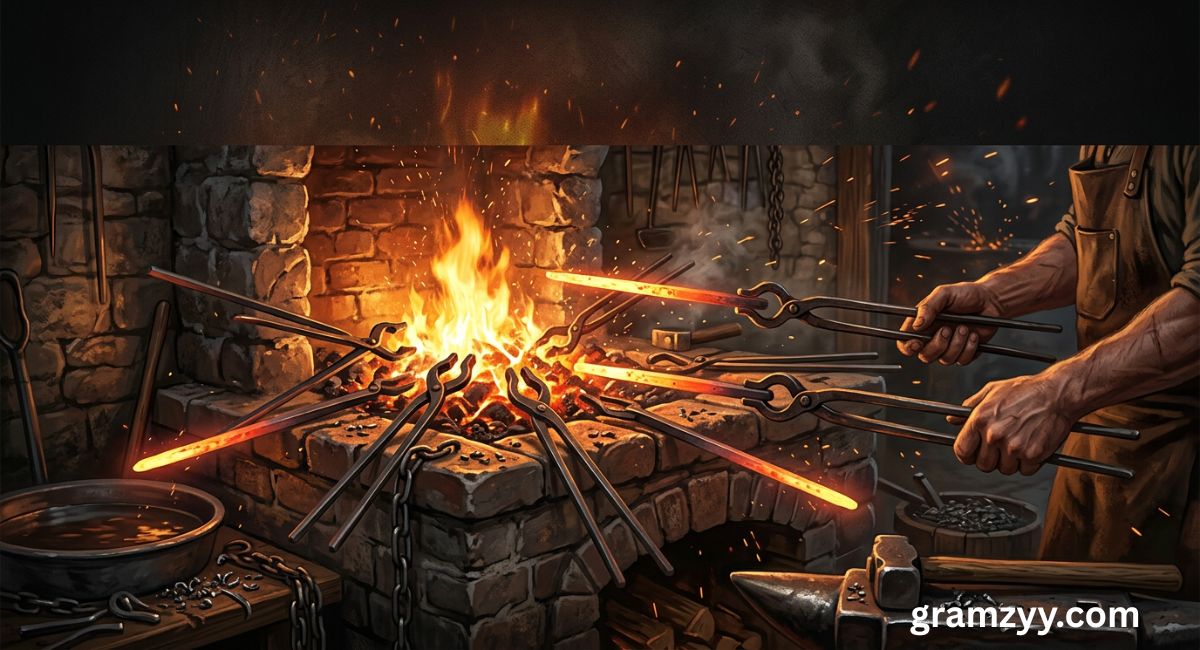
The phrase traces back to blacksmithing, a trade where the imagery makes perfect sense once you picture it:
- A blacksmith heats iron in a forge before shaping it.
- Each piece needs to be worked while it’s still hot.
- If a smith puts too many irons in the fire at once, some will cool down, overheat, or get ruined before he can get to them.
That literal risk became a figurative one. Just as a blacksmith can’t properly shape every iron at once, a person can’t give full effort to every task when they’ve taken on too much. The result is usually the same in both cases: something gets rushed, forgotten, or done poorly.
Quick definition: Too many irons in the fire = too many responsibilities happening at once, often leading to reduced quality, missed deadlines, or stress.
It’s worth noting that the phrase isn’t always negative. Having “a few irons in the fire” or “several irons in the fire” can simply mean you have multiple options or projects in motion — a neutral or even positive idea. It’s the word “too many” that tips the meaning toward overload and warning.
Why Is the Phrase Easy to Misread?
Even fluent English speakers stumble over this idiom, and it usually comes down to three things.
- It sounds like a brag. Because it references being “busy,” some people use it to mean they’re impressively productive. In reality, the idiom leans cautionary — it points to a problem, not an achievement.
- The related phrase “irons in the fire” (without “too many”) has a different shade of meaning. Dropped alone, it often just describes having multiple opportunities or projects going, without implying overload.
- The imagery is unfamiliar. Few people today have watched a blacksmith work, so the connection between a cooling iron and a missed deadline isn’t always obvious at first glance.
Understanding this distinction matters for accurate usage:
| Phrase | Common Meaning | Tone |
|---|---|---|
| Too many irons in the fire | Overcommitted; handling more than one can manage well | Cautionary / negative |
| A few / several irons in the fire | Multiple projects or options in progress | Neutral or positive |
| On one’s plate | Similar to “too many irons”; current workload or responsibilities | Neutral to negative |
Too Many Irons in the Fire in Real Sentences
Seeing the idiom in context makes it much easier to use naturally. Below are examples across different situations, plus a look at how the phrase is sometimes used incorrectly.
Correct Usage Examples
- “I had to turn down the freelance project — I already have too many irons in the fire this month.”
- “She’s got too many irons in the fire between her full-time job, night classes, and coaching her son’s soccer team.”
- “The startup founder admitted he had too many irons in the fire, which is why the product launch slipped by two months.”
- “Don’t give the new hire more tasks yet; he’s already got too many irons in the fire.”
- “With three side businesses and a full-time career, Mark has way too many irons in the fire to give any of them his best effort.”
Incorrect Usage Examples
Because the idiom carries a warning, using it to praise someone’s efficiency misses the mark.
- ❌ “She has too many irons in the fire, and that’s why she’s so successful.” (This frames overcommitment as a strength, which contradicts the idiom’s cautionary meaning.)
- ❌ “I have too many irons in the fire, but everything is running smoothly.” (If everything is under control, the idiom doesn’t apply — the phrase implies strain, not ease.)
- ❌ “He only has one iron in the fire, so he’s overworked.” (One task alone doesn’t fit the idiom; it specifically requires multiple competing responsibilities.)
Context Variations
The idiom adapts naturally across different settings:
- Workplace: “Our manager has too many irons in the fire this quarter, juggling three client accounts and a new hire.”
- Personal life: “Between the wedding planning, the new puppy, and the house renovation, we have too many irons in the fire right now.”
- Business/finance: “The company had too many irons in the fire — new product lines, an acquisition, and a market expansion — and it strained cash flow.”
- Casual conversation: “Can’t make it Friday, I’ve got too many irons in the fire this week.”
Common Mistakes with Too Many Irons in the Fire
Even confident writers and speakers slip up with this idiom. Here are the mistakes to watch for:
- Using it as a compliment. The phrase signals risk or strain, not skillful multitasking.
- Dropping “too many” and expecting the same meaning. “Irons in the fire” alone can be neutral; “too many” is what introduces the warning.
- Pairing it with claims of ease. Saying you have too many irons in the fire “but it’s all under control” undercuts the idiom’s meaning.
- Applying it to a single task. The idiom requires multiple competing demands, not one large project.
- Overusing it in formal writing. Because it’s a colloquial idiom, it can feel out of place in strictly formal reports or academic writing — a plain phrase like “overextended” or “overcommitted” may fit better there.
How Do You Remember the Meaning?
The blacksmithing origin is the easiest memory trick, since the logic maps directly onto real life.
- Picture the forge: Imagine a blacksmith surrounded by glowing metal rods. He can only hammer one at a time. Any others left in the fire too long will overheat or cool before he can use them.
- Connect it to your own schedule: Each “iron” is a task, project, or commitment. Your attention is the hammer — it can only strike one thing at a time.
- Use the “burnout” cue: If you’re mentally picturing yourself getting scorched or stretched thin, you’re using the idiom correctly.
- Test with a simple question: Am I describing a situation where things might get neglected or rushed? If yes, “too many irons in the fire” fits.
When Should You Use It?
This idiom works best in situations describing overcommitment, competing priorities, or the risk of spreading yourself too thin. It’s appropriate when:
- You (or someone else) are juggling multiple projects, jobs, or responsibilities at once.
- There’s a real risk that quality, focus, or deadlines will suffer because of the workload.
- You want a natural, conversational way to explain why you can’t take on something new.
- You’re describing a business, team, or organization stretched across too many initiatives at once.
It’s less appropriate when:
- Someone is simply busy but managing everything well — in that case, “juggling a lot” or “keeping busy” reads more accurately.
- Only one task or responsibility is involved.
- You want to express admiration for someone’s productivity rather than concern about overload.
Conclusion
“Too many irons in the fire” is a centuries-old idiom that still applies perfectly to modern overcommitment — whether it’s overloaded work schedules, too many side projects, or a calendar packed with competing priorities. The key to using it correctly is remembering its cautionary tone: it points to a risk of doing too much and doing none of it well, not a badge of honor for staying busy.
Next time your schedule starts feeling like a blacksmith’s forge full of cooling metal, you’ll know exactly which idiom fits — and how to use it the right way.
FAQs
What does “too many irons in the fire” mean?
It means being involved in more tasks or responsibilities than one can properly manage at the same time, often leading to reduced quality or missed deadlines.
Where did the phrase “too many irons in the fire” come from?
It originates from blacksmithing, where heating too many iron pieces at once risked ruining some of them before they could be shaped.
Is “irons in the fire” always negative?
No. Without “too many,” the phrase can simply mean having multiple projects or opportunities in progress, without a negative tone.
What’s a good synonym for “too many irons in the fire”?
“Too much on one’s plate,” “spread too thin,” or “overcommitted” all carry a similar meaning.
Can you use this idiom in professional writing?
Yes, informally — it works well in blogs, emails, or casual reports, but a direct phrase like “overextended” may suit formal documents better.