Pajamas vs pyjamas: If you’ve ever typed “pajamas” and had autocorrect flag “pyjamas” (or the other way around), you’re not alone. Both words describe the same soft, loose-fitting sleepwear, yet they’ve sparked spelling confusion for over a century. This guide breaks down the definitions, origins, grammar, and regional rules behind pajamas vs pyjamas — so you never second-guess yourself again.
The Core Concepts Of Pajamas vs Pyjamas
Definitions And Meanings
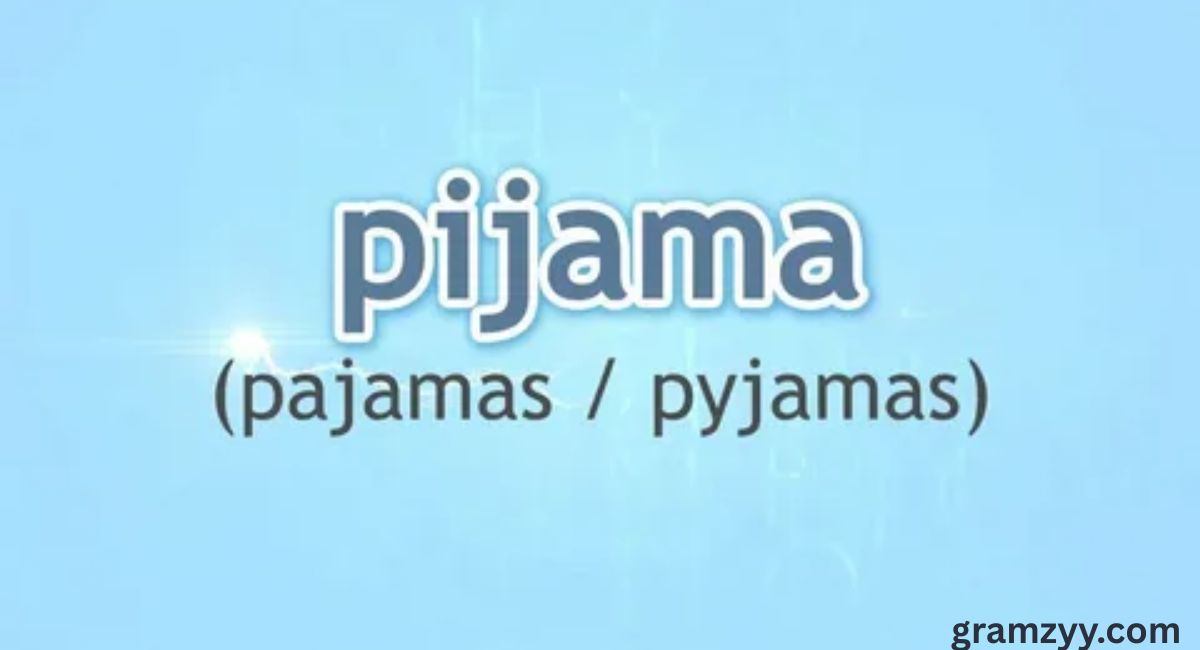
Pajamas and pyjamas both refer to a matching set of loose clothing — usually a top and trousers — worn for sleeping or lounging at home. There is no difference in meaning between the two words. The only distinction is spelling, which depends on which variety of English you’re writing in.
- Pajamas — the American English spelling
- Pyjamas — the British English (and Commonwealth) spelling
Both are treated as plural nouns, much like “pants” or “scissors.” You wouldn’t say “a pajama”; instead, you’d say “a pair of pajamas.”
Etymology And Evolution
The word didn’t originate in English at all. It traces back to the Persian term pāy-jāma, meaning “leg garment,” formed from pāy (leg/foot) and jāma (clothing). The word passed into Hindi and Urdu before British colonists in the Indian subcontinent adopted it during the 17th and 18th centuries.
Originally, pajamas were loose daytime trousers worn in hot climates by men and women across South Asia. British officials picked up the garment as comfortable “dishabille” wear, and by the Victorian era, tailors had reshaped it into a matching two-piece nightwear set back in Britain.
The spelling split happened later:
- British English kept the “py-” spelling, closer to the original transliteration and reinforced by French influence, since French adopted the word as pyjama.
- American English shifted to “pa-” largely due to Noah Webster’s 19th-century push for simplified, phonetic spelling — the same reform that gave us “color” instead of “colour” and “center” instead of “centre.”
Grammatical Function And Mechanics
Both words function as plural nouns and take plural verbs (“These pajamas are soft,” not “This pajamas is soft”). The rarely used singular form — pajama or pyjama — mostly appears as an adjective, as in “pajama party” or “pyjama top.”
| Grammar Point | Example |
|---|---|
| Plural noun | She packed her pajamas for the trip. |
| Adjective form | He wore a pajama shirt to bed. |
| Common collocation | pajama party, pyjama trousers, PJ set |
Contextual Examples
Standard Usage Of Pajamas vs Pyjamas
- American English: “Zoe changed into her pajamas after her bath.”
- British English: “Zoe changed into her pyjamas after her bath.”
Both sentences describe the exact same action; only the spelling changes based on audience.
Alternative Usage Or Nuance
In several South Asian countries, “pajamas” (or the related word “pyjama”) can still refer simply to loose daytime trousers rather than sleepwear — a nod to the word’s original meaning before it became associated exclusively with bedtime. Terms like “kurta pyjama” describe traditional daywear, not nightclothes.
Professional Vs. Academic Contexts
In formal or academic writing, spelling should match the target audience or publication’s style guide:
- U.S.-based publications, textbooks, and retailers (Amazon, Target) almost always use pajamas.
- UK, Australian, Indian, and other Commonwealth publishers default to pyjamas.
- International brands sometimes use both spellings across different regional websites to capture search traffic in each market.
Literary Usage & Cultural Impact Of Pajamas vs Pyjamas
Famous Examples In Literature
The most recognizable literary example is John Boyne’s 2006 novel The Boy in the Striped Pyjamas, later adapted into a major film. The British spelling in the title anchors the book firmly in Commonwealth English, even though American editions and reprints have occasionally used “pajamas.”
Literary Analysis
Word choice in titles and dialogue often signals setting, nationality, or narrative voice. An author writing British characters will almost always choose “pyjamas” to keep dialogue authentic, while American authors default to “pajamas” for the same reason. This small spelling choice becomes a subtle marker of place and voice — something editors pay close attention to during localization.
Cognitive Linguistics: Why We Struggle With Pajamas vs Pyjamas
Spelling confusion here comes down to exposure and memory patterns. Readers absorb spelling through repetition, so someone raised on American media may find “pyjamas” visually jarring, and vice versa. Add in global streaming, international online shopping, and social media — where both spellings appear constantly — and it’s easy to see why even fluent writers hesitate before typing the word.
Synonyms, Antonyms, And Related Concepts
Synonyms And Distinctions
Common alternatives and related terms include:
- PJs — casual shorthand used in both American and British English
- Nightwear — a broader category that includes nightgowns and robes
- Sleepwear — a neutral, retail-friendly umbrella term
- Jim-jams / jammies — informal British slang
- Night suit — common in South Asian English
There’s no true antonym, though “daywear” or “outerwear” contrasts functionally with pajamas as clothing meant for rest rather than public wear.
Regional Differences (US Vs. UK)
| Region | Preferred Spelling | Notes |
|---|---|---|
| United States | Pajamas | Standard in retail, media, and schools |
| Canada | Mixed | Historically inconsistent; pyjamas has some edge |
| United Kingdom | Pyjamas | Standard in publishing and education |
| Australia / New Zealand | Pyjamas | Follows British convention |
| India | Pajamas (narrow preference) | Both spellings appear; usage is split |
| Philippines | Pajamas | Follows American English norms |
Common Mistakes And Corrections
Breakdown For The Top Two Errors
- Mixing spellings within the same document. Writers sometimes switch between “pajamas” and “pyjamas” in one piece. Fix: pick one spelling based on your audience and stay consistent throughout.
- Treating the word as singular. Writing “this pajama is comfortable” instead of “these pajamas are comfortable” is a common grammatical slip, since the word is always plural in modern usage.
Practical Tips And Field Notes
The Editor’s Field Note
When editing for a global audience, check your style guide first. Most major style guides (AP, Chicago) default to “pajamas” for U.S. publications, while Oxford-based guides use “pyjamas.” If you’re writing for an international brand, consider using the American spelling for global SEO reach, since search volume for “pajamas” tends to be higher worldwide, then localize per region if needed.
Mnemonics And Memory Aids For Pajamas vs Pyjamas
- Pajamas = America — both start with a similar rhythm (“pa-” sound), and America is one word.
- Pyjamas = “y” for “why not, Britain does it differently.” The “y” is a quick visual flag for British spelling.
Etymological Dive
Tracing the full journey: Persian pāy-jāma → Hindi/Urdu adoption → English transliteration in British India (earliest recorded use around 1801) → British spelling “pyjamas” solidified through French linguistic influence → American spelling “pajamas” emerging from 19th-century phonetic spelling reforms. This lineage places pajamas alongside other English words borrowed from the Indian subcontinent, including bungalow, dungarees, and jungle.
Cognitive Linguistics
From a language-processing standpoint, spelling preference is largely a matter of orthographic familiarity — the brain recognizes whichever version it has seen most often as “correct-looking.” This is why bilingual readers exposed equally to both British and American English often report that neither spelling looks wrong to them, while monolingual readers strongly favor their regional variant.
Conclusion
Pajamas and pyjamas are simply two spellings of the same cozy, comfortable sleepwear — one shaped by American spelling reform, the other rooted in British tradition and its French-influenced transliteration. Neither is more “correct” than the other; the right choice depends entirely on your audience, region, and style guide. Whichever spelling you choose, consistency is what matters most for clear, professional writing.
FAQs
Is it pajamas or pyjamas in American English?
Pajamas is the standard spelling in American English, used across U.S. media, retail, and publishing.
Is it pajamas or pyjamas in British English?
Pyjamas is the standard spelling in British English and most Commonwealth countries, including the UK, Australia, and New Zealand.
Do pajamas and pyjamas mean different things?
No, both words describe the same loose-fitting sleepwear. The only difference is spelling, not meaning.
Where does the word pajamas come from?
It comes from the Persian word pāy-jāma, meaning “leg garment,” which passed through Hindi and Urdu before entering English during British colonial rule in India.
Which spelling should I use for global SEO?
“Pajamas” generally has higher global search volume, but it’s best to match your spelling to your target audience’s regional English.
Is pajamas singular or plural?
Pajamas (and pyjamas) is always a plural noun, similar to “pants” or “scissors.”