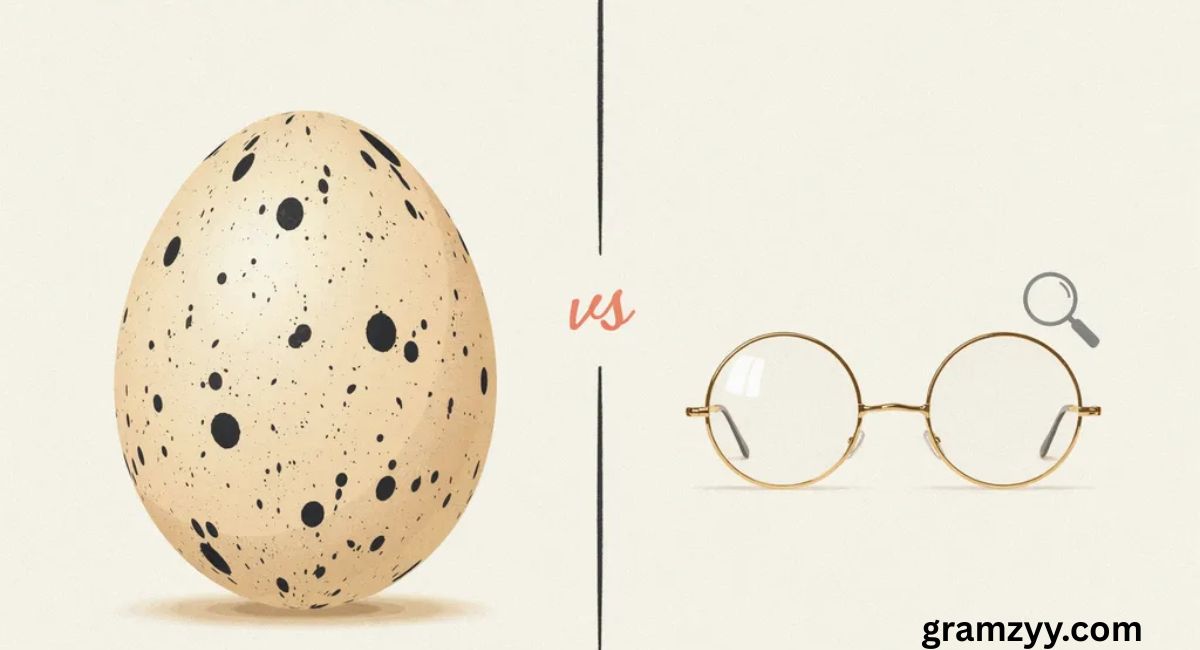
Two words. Nearly identical spelling. Completely different meanings. If you have ever typed one when you meant the other, you are not alone. The pair bespeckled vs bespectacled trips up writers at every level — from students drafting essays to seasoned editors polishing long-form articles. One tiny letter swap changes a sentence about small spots into a sentence about eyeglasses, and that swap matters far more than it first appears.
This guide breaks down both words, shows you exactly how to use them, flags the most common errors, and gives you practical tips so you can write with confidence every time.
Contextual Examples
What Each Word Means: Bespeckled vs Bespectacled
Before diving into examples, let’s fix the definitions clearly.
| Word | Part of Speech | Core Meaning | Typical Subject |
|---|---|---|---|
| Bespeckled | Adjective | Covered with small spots, specks, or dots | Objects, surfaces, animals, fabric |
| Bespectacled | Adjective | Wearing spectacles (eyeglasses) | People, fictional characters |
The root words tell the whole story. Bespeckled comes from speck — a tiny mark or dot. Add the prefix be- and the suffix -led and you get “covered with specks.” Bespectacled comes from spectacle, an older word for glasses. Same structure, completely different meaning.
Think of it this way: SPECK → bespeckled and SPECTacles → bespectacled. That single distinction in the middle of the word is your fastest memory trick.
Example 1 — Clear Surface Description
The old ceramic bowl was bespeckled with brown and cream dots.
Here the subject is an object (a bowl), and the spots are a visual pattern. This is the natural home for bespeckled. Never use bespectacled for an inanimate surface.
Example 2 — Person Wearing Glasses
The bespectacled librarian looked up from her desk and smiled.
The subject is a person. The detail tells us she wears glasses. Bespectacled paints a quick, vivid portrait without needing the phrase “who wore glasses.” It is especially common in journalism and literary fiction.
Example 3 — Two Items in One Line
A bespeckled robin perched beside the bespectacled cartoon owl on the cover.
This sentence uses both words correctly. The robin has spotted feathers; the owl (a drawn character) wears glasses. Keeping both in one line highlights how distinct the meanings are.
Example 4 — Predicative Use
Her canvas was bespeckled with flecks of cerulean and gold.
Both words can appear after a linking verb (predicative position). In this position, bespeckled with is the most natural collocation, showing what causes the spots.
Example 5 — Appositive or Extra Note
The professor, bespectacled and soft-spoken, began the lecture.
Here bespectacled sits in an appositive phrase — extra information set off by commas. This construction is common in narrative writing and biography.
Example 6 — Swap Error to Fix
Wrong: The bespectacled tablecloth was spread across the garden table. Right: The bespeckled tablecloth was spread across the garden table.
A tablecloth cannot wear glasses. Swap bespectacled for bespeckled and the sentence makes sense.
Common Mistakes: Bespeckled vs Bespectacled
Mistake 1 — Mixing the Two Words
This is the big one. Writers reach for one word and type the other because the spelling is so close. Always pause and ask: Does my subject have spots or glasses?
- Wrong: The bespeckled scientist pushed her glasses up her nose.
- Right: The bespectacled scientist pushed her glasses up her nose.
Mistake 2 — Wrong Modifier Placement
Adjectives should sit close to the nouns they modify. Placing bespeckled or bespectacled too far from the noun creates ambiguity.
- Weak: Standing by the wall, the man with a tie was bespectacled.
- Stronger: The bespectacled man in a tie stood by the wall.
Mistake 3 — Using the Word in the Wrong Register
Both words are slightly formal. In casual conversation, everyday speech, or plain instructions, simpler alternatives are often clearer.
| Formal/Literary | Plain Alternative |
|---|---|
| bespeckled | spotted, dotted, flecked |
| bespectacled | wearing glasses, glass-wearing |
For children’s books, instructional content, or quick news copy, the plain versions usually work better.
Mistake 4 — Subject–Verb Agreement Errors
When a bespeckled or bespectacled adjective modifies a plural noun, the verb must be plural too.
- Wrong: The bespectacled students was late for class.
- Right: The bespectacled students were late for class.
See also : What Does “Talking Out of the Side of Your Mouth” Mean?
Mistake 5 — Overuse That Causes Confusion
Repeating either word several times in one paragraph makes the prose feel cluttered and can draw unintended attention to the word itself. Use it once for effect, then switch to a pronoun or a simpler synonym.
American vs British English Differences
Core Meaning Is the Same
Both American and British English agree on definitions. Bespeckled means spotted in both varieties; bespectacled means wearing glasses in both. There is no transatlantic confusion about what either word means.
Small Style Notes
British writers may slightly prefer the shorter form spectacled in casual contexts — “a spectacled gentleman” instead of “a bespectacled gentleman” — though both are perfectly correct. American writers, especially in journalism and character profiles, tend to use bespectacled as their standard choice.
When to Use Simpler Words
In technical writing or plain-language instructions, both American and British style guides favor spotted, dotted, or wearing glasses over the longer Latin-rooted forms, especially when the audience includes non-native English speakers or younger readers.
Idiomatic Expressions: Bespeckled vs Bespectacled
Common Collocations With Bespeckled
- Bespeckled with — the most frequent pattern, showing what creates the spots
- The meadow was bespeckled with wildflowers.
- Bespeckled surface / fabric / feathers — describing a patterned texture
- Bespeckled egg / shell — common in nature writing
Common Collocations With Bespectacled
- Bespectacled professor / scholar / detective — a stock character image in fiction and journalism
- Bespectacled figure / face — useful in brief character sketches
- Bespectacled and [adjective] — pairing with another trait for quick character description (bespectacled and bookish)
Figurative Use
Both words can stretch beyond their literal meanings in creative writing.
- The night sky was bespeckled with stars. (stars as tiny dots)
- The speech was bespeckled with unexpected humor. (jokes scattered throughout)
- The bespectacled city skyline peered through the fog. (personification; skyscrapers like “glasses” on the city’s face)
The phrase bespeckled with in figurative use signals that something is “marked with” or “studded with” something — a versatile construction for descriptive prose.
See also : Patron vs Benefactor: Understanding the Difference
Practical Tips: Bespeckled vs Bespectacled
Tip 1 — Quick Meaning Check
Look at the middle of the word. Does it contain SPECK or SPECT? Speck = tiny dot. Spect = spectacles. This two-second check will catch almost every swap error before it reaches your reader.
Tip 2 — Put Adjective Next to Noun
Place bespeckled or bespectacled immediately before or after the noun it describes. Distant placement weakens the modifier and invites misreading.
Tip 3 — Use Plain Words for Clarity
If your audience is young, non-specialist, or reading quickly, replace these words with simpler alternatives: spotted, dotted, wearing glasses. Precision matters, but so does comprehension.
Tip 4 — Check Verb Agreement
After you write a sentence with either adjective, read the subject and verb aloud together. If the noun is plural, the verb must be plural. Do not let the adjective distract you from this check.
Tip 5 — Read the Sentence Aloud
Hearing your sentence spoken is one of the fastest ways to catch errors. Your ear will often notice an awkward word choice before your eye does.
Tip 6 — Keep Sentences Short for Younger Readers
Long sentences with formal adjectives are harder for children and language learners to process. If you are writing for that audience, use a short, simple sentence and then explain the word separately.
Tip 7 — Use Examples to Teach
When explaining either word to a student or colleague, always pair the definition with a concrete example sentence. Abstract definitions rarely stick without context.
Tip 8 — Check Collocations
Ask whether the word you have chosen fits the natural phrase patterns. Bespeckled with is natural. Bespectacled with is not. Collocations are a fast quality check.
Tip 9 — Avoid Anthropomorphism Unless Fun
Objects and surfaces should be bespeckled, not bespectacled. The exception is deliberate personification in humor or children’s stories — giving a teapot glasses for comic effect, for instance.
Tip 10 — Use a Simple Editing Checklist
Before you submit any piece of writing, scan for these two words specifically:
- Is the subject a person or character? → Use bespectacled (for glasses) or bespeckled (for spots on that person’s skin/clothing).
- Is the subject an object or surface? → Use bespeckled only.
- Does the verb agree with the noun? → Check plural/singular.
- Is the modifier placed close to its noun? → Move it if not.
See also : Ingrained vs Engrained: Which is correct?
Revision Example
Fixing a Bad Sentence
Before: A bespectacled leaf fell from the oak tree. After: A bespeckled leaf fell from the oak tree.
Leaves cannot wear glasses. The adjective needed was bespeckled, describing the spotted pattern on the leaf’s surface.
Fixing Agreement
Before: The bespectacled children was gathered in the hall. After: The bespectacled children were gathered in the hall.
The plural noun children demands the plural verb were. The adjective has no effect on this rule.
Fixing Modifier Position
Before: The egg, found in the nest, was bespeckled, which the ornithologist catalogued. After: The ornithologist catalogued the bespeckled egg found in the nest.
Moving the adjective next to its noun (bespeckled egg) tightens the sentence and removes the dangling relative clause.
FAQs
What is the difference between bespeckled and bespectacled?
Bespeckled means covered with small spots or specks; bespectacled means wearing glasses. They share a similar spelling but have completely different meanings.
Can bespeckled describe a person?
Yes, but only if describing spots on their skin or clothing — not their glasses.
Is bespectacled formal?
It is slightly formal and widely used in journalism, literature, and character description. In casual writing, “wearing glasses” works just as well.
Can objects be bespectacled?
Not in standard usage. Objects do not wear glasses unless you are intentionally personifying them for humor or creative effect.
Which word appears more often in modern writing?
Bespectacled is significantly more common. According to Google Ngram data, it appears roughly three times more frequently than bespeckled in published books.
Is there a difference between American and British English for these words?
No meaningful difference in meaning. British writers occasionally prefer the shorter form spectacled, but both varieties understand bespectacled perfectly.
What is the best memory trick for these two words?
Focus on the root: SPECK leads to bespeckled (spots); SPECTacle leads to bespectacled (glasses). One glance at the middle of the word will tell you which to use.
Conclusion
The difference between bespeckled vs bespectacled is small on paper and enormous in meaning. One word paints a picture of tiny spots dotting a surface; the other places a pair of glasses on a person’s face. Mixing them up does not just look careless — it sends readers in entirely the wrong direction.
The fix is straightforward. Check the root. Check the subject.The verb. Read the sentence aloud. Those four steps take less than ten seconds and will catch every swap error before it reaches your audience. Once the root words speck and spectacle are locked in your memory, choosing the right word becomes automatic — and your writing becomes sharper for it.